Rechercher dans Standen & Landen

Showing posts with label histoire du droit. Show all posts

29 June 2021

TIJDSCHRIFT/REVUE: Pro Memorie. Bijdragen tot de Rechtsgeschiedenis der Nederlanden XXIII (2021), afl. 1

 
  • Redactioneel
  • 'Het quaestieuze verdronkene goud'
    • Door Hylkje de Jong 
    • https://doi.org/10.5117/PM2021.1.002.JONG
    • Zacharias Huber (1669-1732) evaluated in the revised arguments, hitherto unknown, which were brought forward in a case, pursued before the Court of Friesland and decided on December 14th 1718. The case dealt with the ownership of a box with gold, found on the beach of Schiermonnikoog in 1710 and which came from the ship , shipwrecked off the coast in 1674. Newly found civil records show that Maria Wilree (1667-1729) from Amsterdam started the procedure to recover the box with gold, because it purportedly belonged to her father Dirck Wilree (1636-1674), director-general for the West India Company in Guinea and who died in the shipwrecking. She took legal action against Henrica Helmhout, regent of Schiermonnikoog and receiver of wrecks, and Gillis Vermeersch, representative of the West India Company. Only Vermeersch was successful in his argument, which he based on the instructions of the Company: it was forbidden to transport unregistered private goods. Such goods forfeited immediately to the Company. Consequently, Wilree claimed for the Company ownership and possession of the box with gold. Helmhout claimed to be the owner by prescription. Their arguments appear not to have been convincing. 
  • Machtsmisbruik, collectieve actie en heerlijk gezag in het land van Westerlo: het politieke proces tegen Jean Philippe Eugène de Merode in 1724
    • Door Klaas van Gelder
    • https://doi.org/10.5117/PM2021.1.003.GELD
    • In 1724, the prosecutor-general of the Grand Council of Malines, the supreme court of the Austrian Netherlands, opened a judicial investigation into the marquis of Westerlo, one of the highest aristocrats in the Low Countries. It was alleged that he had abused his power against a peasant from Herselt, one of the villages in the marquisate of Westerlo. The investigation ultimately led nowhere, but its records do reveal frequent and far-reaching abuses of power against the inhabitants of the marquisate. Moreover, they show that the villagers were not powerless but could organise themselves in various ways against their lord’s coercive actions. Additionally, the case illustrates the gradual and growing penetration of the state apparatus into the administration of local seigneuries. Finally, this essay demonstrates the need for more research on the relationships between lords and villagers. This is a neglected field of inquiry although the majority of the population in the Austrian Netherlands lived in the countryside, large parts of which consisted of seigneuries. 
  • Strafverzachting door Hof van Assisen van West-Vlaanderen in de Hollandse periode (1814-1830)
    • Door Jos Monballyu
    • https://doi.org/10.5117/PM2021.1.004.MONB
    • This contribution deals with the softening of sentences by the Assize Court of West Flanders in the Dutch period (1814-1830). It is successively examined how the judges in this Court made use of a number of provisions in the of 1810 to pursue their own sentencing policy, secondly, how the same judges, by re-qualifying the facts that the public prosecutor had brought to them defendant, succeeded in imposing a lesser sentence than that claimed by the prosecutor, third, how those same judges made use of the decisions of September 9, 1814 and January 20, 1815, invoking extenuating circumstances, to impose a lesser penalty than that determined in the of 1810 and finally how King William I converted some death sentences into lesser punishments with his right of grace. 
  • Rogier versus Jottrand: dure beledigingen in de Belgische opiniepers (1861-1863)
    • Door Frederik Dhondt 
    • https://doi.org/10.5117/PM2021.1.005.DHON
    • The Belgian Constitution guaranteed political liberty, exemplified by the mandatory competence of the jury for judging political and press offences. However, the constitution did not literally mention quasi-delicts. In 1861, liberal statesman Charles Rogier was insulted by the ultramontanist Catholic newspaper . He sued the newspaper’s printer under tort law, and obtained a considerable amount of damages, bypassing the jury. Progressive radical lawyer Lucien Jottrand, former member of the Constituent Assembly, argued at length that the constitution exclusively reserved competence for both civil and criminal liability to the jury. The Brussels Court of Appeal and the Court of Cassation rejected this reasoning and insisted on the superior natural law-origins of tort law. Yet, this decision created a risk of private censorship, well documented in the press and in private archives on the legal battle around the
  • Boekbespreking "Géraldine Cazals, L’arrestographie flamande. Jurisprudence et littérature juridique à la fin de l’Ancien Régime (1668-1789) [Bibliothèque des Lumières XCIII], Librarie Droz S.A., Genève, 2018, 344 p., ISBN 9782600058230, € 42,00"
  • Boekbespreking "Peter van den Berg, Kolonialisme en codificatie. Hoofdstukken uit de Caribische en Amerikaanse rechtsgeschiedenis, Boom, Den Haag, 2020, 390 p., ISBN 9789462908239, € 59,00"

-----------------------------

Meer info/davantage d'informations: hier/ici

24 September 2020

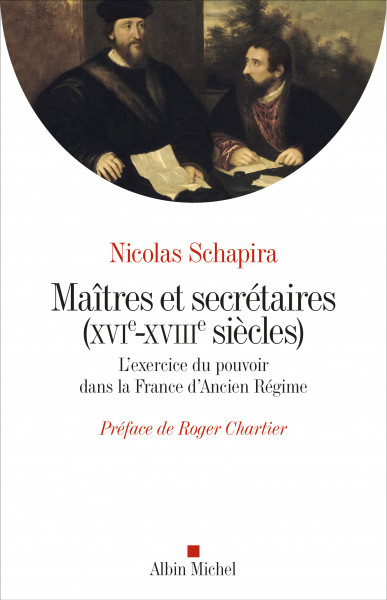
BOEK/OUVRAGE: Nicolas SCHAPIRA, Maîtres et secrétaires (XVIè - XVIIIè siècles). L'exercice du pouvoir dans la France d'Ancien Régime (Paris: Albin Michel, 2020), 336 p. ISBN 978-2-2264-5305-1, € 24

(bron/source afbeelding/image: univ-droit)

Samenvatting/résumé:
Secrétaire, secrétariat : une figure aujourd’hui omniprésente, une présence qui va de soi. Il fut un temps où le secrétaire était un domestique, un intime, gardien des secrets et des affaires privées de son maître. L’enquête de Nicolas Schapira met en lumière l’apparition de ce couple, où l’un décide tandis que l’autre conseille, écrit, et tient mémoire. C’est entre Renaissance et âge des Lumières, au moment où le papier devient le support de toute décision, que paraît ce personnage nouveau, pouvant être simple scribe comme conseiller des princes, reconnu pour son expertise. Quelle que soit sa condition, le secrétaire est une silhouette de l’ombre : des traités sont écrits pour louer son action et ses compétences, mais les contemporains dénoncent son influence excessive et son ubiquité. Associant les méthodes de l’histoire et des sciences sociales, ce livre raconte l’ascension d’un groupe qui ne s’identifiait ni à un métier ni à un statut, mais dont le pouvoir s’accrut à mesure que l’État se construisait sous l’Ancien Régime et qu’il pénétrait progressivement toutes les strates de l’administration, jusqu’à nos jours.

 Over de auteur/sur l'auteur:

Agrégé et docteur en histoire, Nicolas Schapira est professeur d’histoire moderne à l’Université Paris Ouest Nanterre. Il est l’auteur, notamment, de Un professionnel des lettres au XVIIe siècle. Valentin Conrart : une histoire sociale, Champ Vallon, 2003 ; et (en collaboration) de Histoire Littérature Témoignage. Écrire les malheurs du temps, Gallimard, 2009

(bron/source: univ-droit)

7 September 2020

OUVRAGE/BOEK: Arthur BENZ, Stephan BRÖCHLER & Hans-Joachim LAUTH (Hg.), Handbuch der europäischen Verfassungsgeschichte im 20. Jahrhundert. Institutionen und Rechtspraxis im gesellschaftlichen Wandel. Band 5: Seit 1989 (Bonn: Dietz, 2020), 1752 p. ISBN 9783801242510, € 210


(image source: Dietz)

Abstract:
Der vorliegende Band 5 bildet den Abschluss der Handbuchreihe zur Verfassungsgeschichte im 20. Jahrhundert. Beginnend mit den Umwälzungen von 1989/90 veranschaulicht er bis in die 2010er-Jahre hinein das Spannungs- und Wechselverhältnis zwischen der einzelstaatlichen Verfassungsentwicklung sowie der Ausbildung einer supranationalen Verfassungsebene. Die Herausgeber betrachten neben formalen und materiellen Aspekten auch die faktische Ausprägung der Verfassungen. Die 48 Länderbeiträge decken das gesamte geografische Europa einschließlich Russlands, der zentralasiatischen Nachfolgestaaten der Sowjetunion, der Türkei und der EU-Institutionen ab. Dabei eröffnet das einheitliche Gliederungsschema einen vergleichenden Zugang zur europäischen Verfassungsentwicklung seit der Wiedervereinigung Deutschlands und legt somit den Grundstein für künftige komparatistische Forschungen.

Meer informatie/davantage d'information: Dietz.

(Bron/source: ESCLH Blog) 


3 September 2020

BOEK/OUVRAGE: : Werner DAUM (Hg., mit Peter BRANDT, Martin KIRSCH & Arthur SCHLEGELMILCH), Handbuch der europäischen Verfassungsgeschichte im 19. Jahrhundert. Rechtspraxis und Institutionen im Wandel. Band 3: 1848-1870 (Bonn: Dietz, 2020), 1536 p. 978-3-8012-4142-1, € 198


(image source: Dietz)

Abstract:
Der vorliegende Band 3 setzt die vorangegangene Betrachtung der verfassungsgeschichtlichen Entwicklung Europas im 19. Jahrhundert fort: Die 28 Länderartikel eröffnen dank ihres einheitlichen Gliederungsschemas einen vergleichenden Zugang zur europäischen Verfassungsentwicklung 1848–1870. In ihrer ausführlichen Einleitung legen die Herausgeber mit einer vergleichenden Synthese der Länderbeiträge die Grundlage für künftige komparatistische Forschungen. Der Band setzt mit der großen europäischen Revolutionswelle von 1848/49 ein und veranschaulicht bis 1870 die weitere Ausgestaltung des spannungsreichen Verhältnisses zwischen mehrheitlich monarchisch geprägter Staatsspitze und nach politischer Partizipation drängender Bürger- und Arbeiterschaft. Auf der Grundlage eines breiten Verfassungsbegriffs, der formale und materielle Verfassungsaspekte sowie ihre faktische Ausprägung umfasst, decken die 28 einheitlich gegliederten Länderbeiträge das gesamte geografische Europa einschließlich Russlands und des Osmanischen Reiches ab.

Bron/Source: ESCLH Blog 


28 August 2020

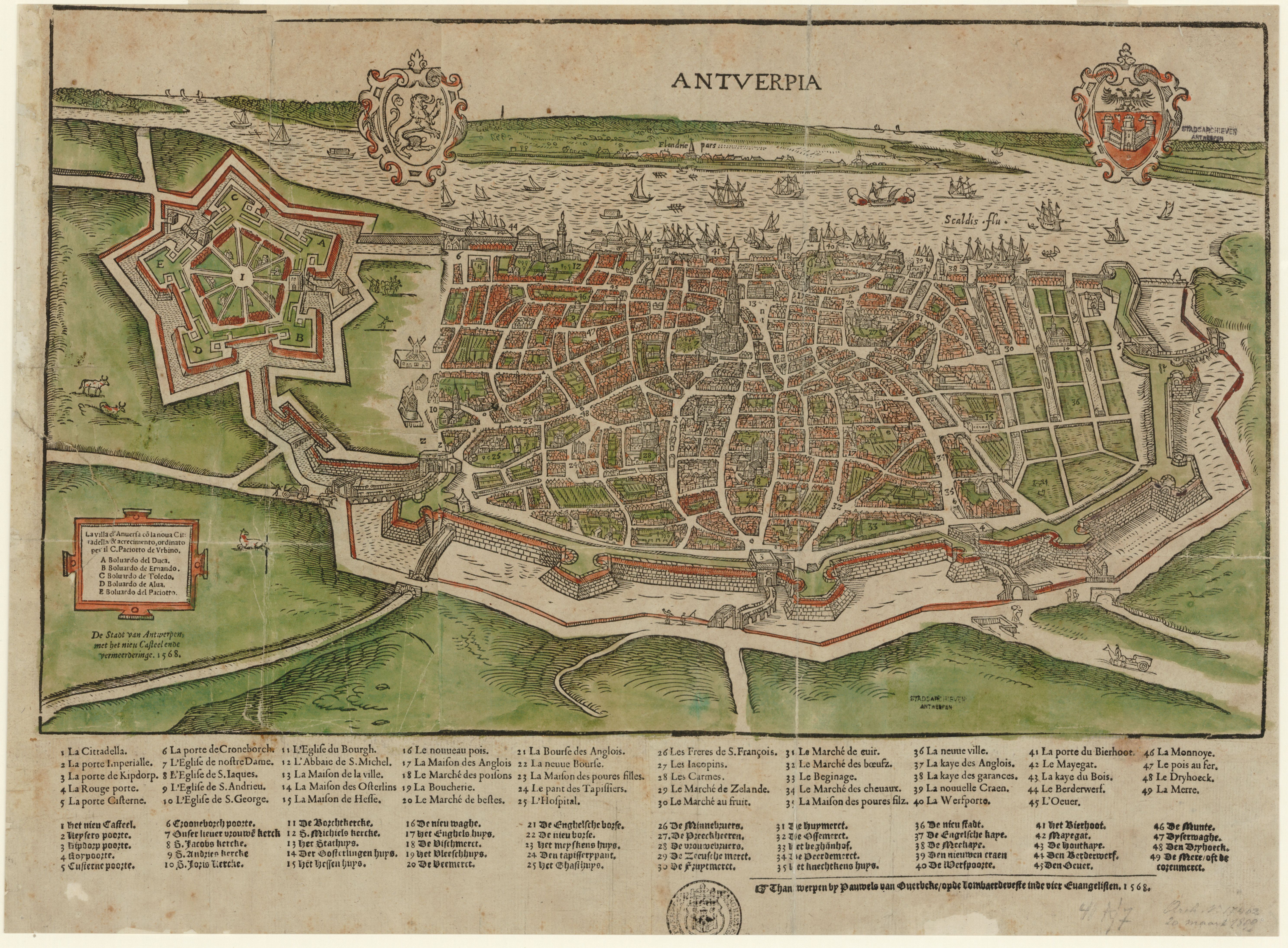
DOCTORAATSVERDEDIGING/SOUTENANCE DE THÈSE: Kaat CAPPELLE, De Strijd om de Broek. Vrouwen en Recht in het 16de-eeuwse Antwerpen (Brussel: VUB, 9 SEP 2020)

(image/afbeelding: Antwerpen/Anvers, 1568; bron/source: Felixarchief/Wikimedia Commons)

Mevr. Kaat CAPPELLE verdedigt op 9 september 2020 om 17:30 haar doctoraatsverhandeling De Strijd om de Broek. Vrouwen en Recht in het zestiende-eeuwse Antwerpen (promotor: Prof. dr. Dave De ruysscher). Deze verdediging gaat door in aula QA op de VUB-campus te Etterbeek. Gelet op de corona-maatregelen wordt de verdediging gestreamd op Microsoft Teams. Geïnteresseerden dienen zich verplicht aan te melden bij de kandidate tegen 7 september ten laatste.

Mlle Kaat CAPPELLE soutiendra sa thèse de doctorat De Strijd om de Broek. Vrouwen en Recht in het zestiende-eeuwse Antwerpen (sous la direction du Professeur Dave De ruysscher), le 9 septembre 2020 à 17:30 dans l'amphithéâtre QA au campus Etterbeek de la VUB. Vu les mesures de restriction covid, la soutenance sera diffusée en ligne par Microsoft Teams. Il est impératif de manifester son intérêt auprès de la candidate pour le 7 septembre au plus tard.

Jury:

  • Prof. dr. Manon Van der Heijden (Universiteit Leiden)
  • Prof. dr. Bram Van Hofstraeten (Maastricht University)
  • Prof. dr. Dirk Heirbaut (UGent/KVAB)
  • Prof. dr. Elisabeth Alofs (VUB/Universiteit Antwerpen)
  • Prof. dr. Heidi Deneweth (VUB)
  • Prof. dr. Dave De ruysscher (VUB/Tilburg) (promotor/directeur de thèse)
  • Prof. dr. Frederik Dhondt (VUB/Universiteit Antwerpen) (voorzitter/président)

2 July 2020

TIJDSCHRIFT/REVUE: Tijdschrift voor Rechtsgeschiedenis/Revue d'Histoire du Droit/The Legal History Review

(image source: Brill)


Laurent Waelkens † (De Dagelijkse Redactie/Le Comité de rédaction/The Editorial Committee) (open access)

Les traductions françaises des Commentaires de William Blackstone à la fin du XVIIIe siècle. Un chapitre de l'histoire de la découverte continentale de la common law anglaise (Filippo Ranieri)
Abstract:
The numerous translations through which the Commentaries on the Laws of England by William Blackstone – a milestone in the history of the common law – became known in France, and thus contributed for the first time to acquaint French jurists with English law, have been largely neglected by legal historians. The first section of the present contribution introduces the French anglophile visitors to England who, during the second half of the eighteenth century, disseminated the work of William Blackstone and its first translations in France. The biography and work of these first translators require a detailed examination. A second section assesses the influence of these translations, particularly in the legal and political debates on the English trial by jury in the context of revolutionary legislation. A third section considers the later translations of Blackstone’s work during the Napoleonic period and the following years. Finally, a call for further research outlines the impact of that translation literature.
A source of inspiration for legal historians: Raoul van Caenegem’s views on legal history (Dirk Heirbaut)
Abstract:
Although Raoul van Caenegem claimed otherwise, he had very strong views on what legal history should be. In his opinion, legal history belonged to the disciplinary field of history, not to law. The legal historian should not only chronicle past evolutions of the law, but also explain them. To this purpose, van Caenegem himself turned to sociology, trying to work with types and models in order to generalise. Van Caenegem rejected the idea of a Volksgeist and advocated to look at the European context in a comparative legal history. Nevertheless, his ‘Europe’ was limited to the founding members of the European Union, joined by England. He constructed legal history as a history of power and preferred to study groups of law makers instead of individuals. In his legal history, the European ‘Second Middle Ages’, from 1100 until 1750, stand out as the cradle of the modern rule of law, with a special role for the cities of medieval Flanders. Although well-known for a leading handbook promoting the idea of the ius commune, the common law of Europe, van Caenegem actually deemed custom to have been the primary source of law in medieval Europe, whereas the role of the ius commune had been, in his opinion, overestimated. As he showed many times during his distinguished career, van Caenegem wanted legal historians to take part in current debates. In the end, his main lesson from legal history was a plea for moderation, as taking a sound idea to its extreme leads to absurd or unintended consequences.
Die Schriftheimat von Vat. Reg. Lat. 886 (Codex Theodosianus libri IX-XVI) (A.J.B. Sirks) (open access)
Abstract:
It is generally assumed that the main manuscript of the Theodosian Code, Vat.Reg.Lat. 886, was copied in the 6th century in South-East Gaul, although Italy as provenance is not excluded. This manuscript contains marginal summaries, of which the origin is also attributed to Gaul. However, it can be shown that the largest group was made by one of the scribes (V2*) after 535 and before 554, on the very manuscript, that this was very likely done in Rome, and that the scribe was a Greek, perhaps a Byzantine official. This conclusion bears upon the provenance of Vat.Reg.Lat. 886. The errors in the Greek constitution CTh 9,45,4 imply that it cannot have been copied in the east. It must have been done in the west and not the Code, sent over in 437, was used (or else the Greek would be in order), but a copy of this Code, in which the scribe had misunderstood the Greek and made errors, which then figure in Vat.Reg.Lat. 886. The copying must have been done after 535 and just before the Summaria were made because the author of the Summaria was one of the correctors.
Zum Klagsziel der actio pigneraticia in personam contraria in D. 13,7,9pr. (Philipp Scheibelreiter) (open access)
Abstract:
In D. 13,7,9pr. (Ulp. 28 ad ed.) a debtor, who has handed over a res aliena as pledge to a creditor, will be sued with the iudicium contrarium. Whereas most handbooks of Roman law understand the aim of the actio pigneraticia contraria as the debtor’s duty to replace the res aliena by a new pledge, owned by the debtor, the sources do not necessarily lead to this conclusion. From the procedural perspective and the condemnatio pecuniaria of classical Roman law (instead of specific performance) this solution seems to be problematic and may have been developed under in any case influence of Justinianic law. Also on the basis of the concept of pignus as obligatio re contracta, it is submitted that the debtor’s obligation could only have concerned the alien thing itself; beside this, the aim of the actio contraria was compensation for the creditor’s damages.
Actor, colonus, conductor, procurator in einem Brief des Kaisers Honorius (Aldona Rita Jurewicz)
Abstract:
In this article the author presents three interpretations of the passage of emperor Honorius’ constitution that has been included in the Theodosian Code under the title quod iussu (CTh 2,31,1). The intention of the author is to prove the thesis that the emperor Honorius accepted a practically existing extension of the use of actio quod iussu to relations between landowners and overseers of the land property. Consequently the actio could be brought against the landowner or possessor of the land (dominus possessionis, cultor terrarum) on the ground that management personnel (servus, actor, conductor, colonus, procurator), regardless of their status libertatis, borrowed money with clear authorisation (iussum). The author does not share the opinion that the background of the emperor’s decision was the economic relation between the landowners and the management personnel.
Failing to observe holy days The evaluation of defense arguments in late medieval English ecclesiastical courts (Justin Scott Kirkland)
Abstract:
The implementation of canon law in the medieval ecclesiastical courts is an enigmatic issue. This article focuses on the types of defense arguments made by people accused of failing to observe holy days, as well as how courts judged such excuses. Even though failing to properly observe holy days – nonobservance – was a minor crime, the courts set a high standard when evaluating justifiable excuses for failing to observe holy days. The courts tended to reject most defense arguments. Despite the overall decline of the ecclesiastical courts in the late fifteenth and early sixteenth centuries, there was no decline in the high standards demanded by the courts in nonobservance cases.
Solórzano Pereira: la argumentación al modo del ius comune como práctica jurídico-cultural y política (Patrico Lazo)
Abstract:
The objective of this article is to characterize the argumental strategy of Juan de Solórzano Pereira in one of the chapters of the Política Indiana, by distinguishing the special features of his thought-structures and their goals. The methodology of this article is based on the Model-reader concept to characterize the adressee of Solórzanos’s work and to discover the effect he sought. Likewise, the article envolves the premise that historical legal argumentation rules are a meaningful manifestation of the Spanish colonial legal culture. The main outcome of this article is the evidence of the political function of Solórzanos’s legal argumentation.
Cassatieberoepen tegen criminele vonnissen en arresten in het Leiedepartement, 1796-1813 (Jos Monballyu)
Abstract:
In the department of the Lys, the cassation appeal against criminal judgments was introduced in 1796 and could be made by both the criminal convicts and the Public Prosecution Service. The first cassation appeal was lodged on 5 May 1796 and the last on 18 December 1813. In total, 187 (24%) of the 779 criminal judgments were appealed in cassation, in 172 cases by 319 criminal convicts and in 15 cases by the Public Prosecution Service. Of those 187 cassation appeals, 167 (89.3%) were rejected and 20 (10.7%) were accepted. In the latter cases, this led to the annulment of the contested judgment and, in most cases, the criminal proceedings were (partially) repeated for an equivalent, nearby criminal court.
Concepción Arenal and the place of women in modern international law (Ignacio de la Rasilla)
Abstract:
This article examines the long-forgotten first book-length treatise on international law ever published by a woman in the history of international law. The first part places Concepción Arenal’s Ensayo sobre el Derecho de gentes (1879) in the historical context of the dawn of the international legal codification movement and the professionalisation of the academic study of international law. The second part surveys the scattered treatment that women as objects of international law and women’s individual contributions to international law received in international law histories up to the early twentieth century. It then draws many parallels between Arenal’s work and the influential resolutions of the first International Congress of Women in 1915 and surveys related developments during the interwar years. The conclusion highlights the need of readdressing the invisibility of women in international legal history.
Book reviews:

  • La Loi des XII tables, Édition et commentaire, written by M. Humbert, 2018 By: A.J.B. Sirks
  • Ricerche sugli editti dei prefetti del pretorio del Cod. Bodl. Roe 18, Processo e documento, written by S. Schiavo, 2018 By: A.J.B. Sirks
  • « Es plantar un mondo nuevo », Légiférer aux anciens Pays-Bas (XIIe-XVIIIe siècle), written by Jean-Marie Cauchies, 2019 By: Serge Dauchy
  • Königliche Gerichtsbarkeit und Landfriedenssorge im deutschen Spätmittelalter, Eine Geschichte der Verfahren und Delegationsformen zur Konfliktbehandlung, written by H. Baumbach, 2017 By: P.L. Nève
  • Das Kleine Kaiserrecht, Text und Analyse eines mittelalterlichen Rechtsbuches, Leithandschrift der Fürstlichen Bibliothek Corvey, Bestandsaufnahme aller anderen Handschriften, Benennung Verfasser, Datierung, Quellen, Auswirkung, written by Dietlinde Munzel-Everling, 2019 By: P.L. Nève
  • Urkundenregesten zur Tätigkeit des deutschen Königs- und Hofgerichts bis 1451, Band 17: Die Zeit Ruprechts 1407-1410, B. Diestelkamp (Hrsg.), bearb. v. U. Rödel, 2019 By: P.L. Nève
  • Gemeine Bescheide, Teil 2: Reichshofrat 1613-1798, edited by P. Oestmann, 2017 By: P.L. Nève
  • Die Akten des Kaiserlichen Reichshofrats, Serie II: Antiqua, Band 4: Karton 278-424, W. Sellert (Hrsg.), bearb. v. T. Schenk, 2017 By: P.L. Nève
  • Fremde Traditionen des römischen Rechts, Einfluß, Wahrnehmung und Argument des «rimskoe pravo» im russischen Zarenreich des 19. Jahrhunderts, written by M. Avenarius, 2014 By: A.J.B. Sirks
Meer op de website van Brill/lisez les articles chez Brill.

(bron/source: ESCLH Blog)


16 March 2020

ANNULATION ET REPORT/ANNULATIE EN UITSTEL: Journées internationales de la Société d'histoire du droit et des institutions des pays flamands, picards et wallons (Middelburg, nouvelle date/nieuwe datum: 14-15 MAI/MEI 2020)

(bron afbeelding: Wikimedia Commons)

Les Journées internationales de la Société d'histoire du droit et des institutions des pays flamands, picards et wallons: histoire du droit et art ont été annulées et reportées à cause de la crise du Coronavirus. Nouvelle date: 14 et 15 mai 2021.

De Internationale dagen van de Société d'histoire du droit et des institutions des pays flamands, picards et wallons: histoire du droit et art zijn geannuleerd en verplaatst wegens de COVID19-crisis. Nieuwe datum: 14 en 15 mei 2021.

11 March 2020

THEMANUMMER/NUMERO SPÉCIAL: Georges MARTYN, Louis BERVKENS & Paul BROOD (eds.) Juristen die schreven en bleven. Nederlandstalige rechtsgeleerde klassiekers (Pro Memorie. Bijdragen tot de Rechtsgeschiedenis der Nederlanden XXI (2019), Nr. 2 (ISSN 15667146/ISBN 9789087048488)

(afbeelding/image: Pro Memorie)

Samenvatting/présentation de l'éditeur:
Her recht is een kind van zijn tijd en wordt gevormd door gewoonte, wetten en rechterlijke uitspraken. Ook individuele juristen bouwen echter mee aan het huis van het recht. In de loop der eeuwen zorgden ze voor de ontwikkeling van de Nederlandse rechtstaal. De doctrine emancipeerde daardoor uit het Latijn en het Frans. Sommige rechtsgeleerde concepten kunnen gelinkt worden aan mensen van vlees en bloed. De redactie van Pro Memorie heeft juristen in Nederland en België gevraagd welke boeken in hun ogen de ruggengraat vormen van de Nederlandstalige rechtswetenschap. Dit heeft geresulteerd in een lijst van 67 boeken die met kop en schouders boven de massa rechtsliteratuur uitsteken. Evenveel specialisten schreven over deze rechtsgeleerde werken een bijdrage van een viertal bladzijden: over leven en werk van de auteur, over de eerste druk, de latere edities, de originaliteit en de nawerking. 

Inhoudstafel/table des matières:
  • Philips Wielant, Practijke civile, 1508-1519 (J. Monballyu)
  • Joos de Damhouder, Practycke ende handbouck in criminele zaeken, 1555 (J. Monballyu)
  • Dirck Volkertsz. Coornhert, Boeven-tucht, 1587 (E.J. Broers)
  • Paullus Merula, Manier van procederen, 1592 (M.-Ch. Le Bailly)
  • Quintyn Weytsen, Een Tractaet van Avarien, 1617 (G. Dreijer en O. Vervaart)
  • Hugo de Groot, Inleiding tot de Hollandsche Rechts-geleertheyd, 1631 (B. Sirks)
  • Bernardus van Zutphen, Practycke der Nederlansche rechten, 1645 (P. Brood)
  • Gerard van Wassenaer, Practykjudicieel, 1660 (S. Dauchy)
  • Simon van Leeuwen, Het Rooms-Hollands-Regt, 1664 (N. de Bruijn)
  • Ulrik Huber, Heedendaegse Rechtsgeleertheyt, 1686 (H. de Jong)
  • Jan-Baptist de Clerck, Commentarien [... ] op de leen-rechten, 1699 (R. Opsommer)
  • Paulus Laman, Anleiding tot de eerste beginselen der Groninger regtskennis, 1738 (P. Brood)
  • Cornelis van Bynkershoek, Verhandelingen van staatszaken, 1740 (F. Dhondt)
  • Pieter Paulus, Verklaring der Unie van Utrecht, 1775-1779 (C. Korbeld)
  • Bavius Voorda, De crimineele ordonnantien, 1792 (M. Muller)
  • Joannes van der Linden, Regtsgeleerd, practicaal en koopmans handboek, 1806 (J. Oosterhuis)
  • Abraham de Pinto, Handleiding tot het Burgerlijk Wetboek, 1837-1838 (J. Oosterhuis)
  • Carel Asser, Het Nederlandsch Burgerlijk Wetboek, vergeleken met het Wetboek Napoleon, 1838 (M. Milo)
  • Johan Rudolf Thorbecke, Aanteekening op de Grondwet, 1839 (E. von Bóné)
  • Adriaan Johannes van Deinse, De algemeene beginselen van strafregt, 1852 (S. Faber)
  • Tobias Michael Carel Asser, Handelsregt en handelsbedrijf, 1862 (R. Klomp)
  • C.W. Opzoomer, Het Burgerlijk Wetboek verklaard, 1865-1892 (J. Van de Voorde)
  • Aäron Adolf de Pinto, Wetboek van Strafregt voor Nederlandsch Indië, 1866 (F. Fernhout)
  • Gerard Diephuis, Het Nederlandsch Burgerlijk Regt, 1869-1891 (J. Lokin)
  • R.T.H.P.L.A. van Boneval Faure, Het Nederlandsche Burgerlijk Procesrecht, 1871-1899 (C.H. van Rhee)
  • G.A. van Hamel, Inleiding tot de studie van het Nederlandsche strafrecht, 1889 (W. Geelhoed)
  • W.L.P.A. Molengraaff, Leid(d)raad bij de beoefening van het Nederlandsche handelsrecht, 1889-1899 (C. Jansen)
  • Maurits Josson, Schets van het recht van de Zuid-Afrikaansche Republiek, 1897 (F. Judo)
  • Philip Kleintjes, Het Staatsrecht van Nederlandsch-Indië, 1903 (L. Sicking)
  • Niko Gunzburg, Misdadige en verwaarloosde jeugd, 1906 (M. Cools)
  • Isaac Henri Hijmans, Het recht der werkelijkheid, 1910 (F. Volkaert)
  • Jan de Louter, Het stellig volkenrecht, 1910 (I. Van Hulle)
  • A.A.H. Struycken, Administratie of rechter, 1910 (J. Crijnen)
  • Betsy Bakker-Nort, Hoofdlijnen voor een moderne huwelijkswetgeving, 1920 (D. Meijer)
  • Karel Brants, Het Belgisch gemeenterecht, 1921 (S. Vandenbogaerde)
  • Albert Kluyskens, Beginselen van burgerlijk recht, 1925-1945 (L. Burgelman)
  • Louis Fredericq, Beginselen van het Belgisch handelsrecht, 1927-1935 (K. Bernauw)
  • Cornelis van Vollenhoven, De ontdekking van het adatrecht, 1928 (N. Efthymiou)
  • Paul Scholten, Algemeen deel, 1931 (E. van Dongen)
  • W.A. Bonger, Inleiding tot de criminologie, 1932 (C. Fijnaut)
  • Paul Bellefroid, Formulierboek van Burgerlijke Rechtsvordering, 1933 (L. Mortiers)
  • Jannes Eggens, Land-Eggens Bewijs, 1933 (T. Booms)
  • Herman Dooyeweerd, De wijsbegeerte der wetsidee, 1935-1936 (B. Hengstmengel)
  • Willem Pompe, Handboek van het Nederlandse strafrecht, 1935 (F. de Jong)
  • René Victor, Een eeuw Vlaamsch rechtsleven, 1935 (J. Verstraete)
  • C.W. van der Pot, Handboek van het Nederlandse staatsrecht, 1940 (N. Graaf )
  • Emiel van Dievoet, Het burgerlijk recht in België en Nederland van 1800 tot 1940, 1943 (F. Stevens)
  • Jules Simon, Handboek van het Belgisch strafrecht, 1943 (T. Vander Beken)
  • André Mast, De geschillen van bestuur naar Belgisch recht, 1945 (B. Debaenst)
  • P.J. Oud, Het constitutioneel recht van het Koninkrijk der Nederlanden, 1947 (G.-J. Leenknegt)
  • Pieter Adriani, Het belastingrecht. Zijn grondslagen en ontwikkeling, 1948-1950(M. Weerepas)
  • E.M. Meijers, De algemene begrippen van het burgerlijk recht, 1948 (J. Smits)
  • Willy Delva, Algemene beginselen van het recht, 1955 (M. Van Der Haegen)
  • Albert Tiberghien, Handboek voor fiscaal recht, 1955 (R. Deblauwe)
  • René Dekkers, Handboek burgerlijk recht, 1956-1958 (F. Blockx)
  • Jean Van Houtte, Beginselen van het Belgisch belastingrecht, 1956, (B. Peeters)
  • Elie Van Bogaert, Beginselen van het volkenrecht, 1958 (E. Somers)
  • Marcel Storme, De bewijslast in het Belgisch privaatrecht, 1962 (R. Delafontaine)
  • Herman Bianchi, Ethiek van het straffen, 1964 (M. De Koster)
  • Walter van Gerven, Algemeen deel, 1969 (P. Gillaerts)
  • Adriaan Pitlo, Figuratief – Nonfiguratief – Legisme – Vrije Rechtsvinding, 1971 (L. Winkel)
  • Jan Ronse, Algemeen deel van het vennootschapsrecht, 1971 (M. Wyckaert)
  • Bob Bakels, Schets van het Nederlands arbeidsrecht, 1972 (I. Asscher-Vonk en W. Bouwens)
  • G.J. Wiarda, Drie typen van rechtsvinding, 1972 (M. Van Hoecke)
  • Herman Lenaerts, Inleiding tot het sociaal recht, 1973 (P. Humblet en W. van Eeckhoutte)
  • J.H. Nieuwenhuis, Drie beginselen van contractenrecht, 1979 (M.E. Storme)
  • Raoul C. van Caenegem, Geschiedkundige inleiding tot het privaatrecht, 1981 (D. Heirbaut)

Meer informatie/davantage d'informations: Uitgeverij Verloren.

13 November 2019

JOB/VACATURE: Poste académique en histoire du droit (UCLouvain: DEADLINE 15 NOV 2019)

(image source: UCLouvain)

De UCLouvain rekruteert een voltijdse professor rechtsgeschiedenis. Meer informatie hier.

L'UCLouvain recrute un professeur à temps plein en histoire du droit. Davantage d'informations ici.

12 November 2019

SOUTENANCE DE THÈSE/DOCTORAATSVERDEDIGING: Elisabeth BRUYÈRE (Gent/Gand, 28 NOV 2019)

(image source: Facebook)

Soutenance publique en vue de l'obtention du grade de docteur en droit: 
Principes, esprit et controverses. L’Avant-Projet de révision du Code civil de François Laurent ou l’oeuvre séditieuse d’un libre-penseur.

Openbare doctoraatsverdediging met het oog op het behalen van de graad van doctor in de rechten:
Principes, esprit et controverses. L’Avant-Projet de révision du Code civil de François Laurent ou l’oeuvre séditieuse d’un libre-penseur.

Par/door Mlle Elisabeth BRUYÈRE.

Directeurs de thèse (promotoren): Prof. dr. Dirk HEIRBAUT & Prof. dr Joke BAECK
Jury: Prof. dr. Jean-Louis HALPÉRIN (Ecole normale supérieure), Prof. dr. Jean-François GERKENS (ULiège), Prof. dr. Frederik DHONDT (VUB/UA), Prof. dr. Georges Martyn & Prof. dr. Patrick Humblet.


2 October 2019

MEDAILLE: Sarton Medaille voor Rechtsgeschiedenis voor Prof. dr Matthias SCHMOECKEL (Bonn) (Gent: Faculteit Recht en Criminologie, 21 NOV 2019): Conditions of a Succesful European Economic Order

(image source: izph.de)

De UGent kent jaarlijks de George Sarton leerstoel voor Wetenschapsgeschiedenis toe, alsook meerdere medailles voor de geschiedenis van een specifieke discipline. Dit draagt de Faculteit Recht en Criminologie prof. dr. Matthias Schmoeckel (Bonn) voor.

L'Université de Gand attribue chaque année une chaire George Sarton pour l'histoire des Sciences. La médaille pour l'histoire du droit sera attribuée cette année au Prof. dr. Matthias Schmoeckel (Bonn).

Prof. dr. Dirk Heirbaut (UGent/Instituut voor Rechtsgeschiedenis) zal optreden als collega proximus. Bij de vorige laureaten horen onder andere Jean-Louis Halpérin (Ecole Normale Supérieure), Heiner Lück (Halle-Wittenberg), Jürgen Weitzel (Würzburg), Anne Lefèbvre-Teillard (Paris II Panthéon-Assas), Paul Brand (Oxford), Serge Dauchy (Lille), Raoul Van Caenegem (UGent), Fred Stevens (KULeuven), Jos Monballyu (KULeuven) en Randall Lesaffer (KULeuven/Tilburg).

Le Prof. Dirk Heirbaut (Gand/Institut d'Histoire du Droit) introduira le lauréat comme collega proximus. Parmi les lauréats passés, on citera notamment Jean-Louis Halpérin (Ecole Normale Supérieure), Heiner Lück (Halle-Wittenberg), Jürgen Weitzel (Würzburg), Anne Lefèbvre-Teillard (Paris II Panthéon-Assas), Paul Brand (Oxford), Serge Dauchy (Lille), Raoul Van Caenegem (Gand), Fred Stevens (KULeuven), Jos Monballyu (KULeuven) et Randall Lesaffer (KULeuven/Tilburg).

Professor Schmoeckel zal zijn Sarton-rede uitspreken rond het thema "Conditions of a successful European Economic Order".

Le professeur Schmoeckel tiendra une conférence Sarton autour du thème "Condtions of a succesful European Economic Order."

De medaille wordt uitgereikt in een publieke ceremonie met lezing, op donderdag 21 november. U kan hier uw komst bevestigen.

La cérémonie publique aura lieu le jeudi 21 novembre prochain. Informations pratiques et réservation ici.

(bron: Rechtshistorische Courant UGent)


1 October 2019

MANUEL/HANDBOEK: Dirk HEIRBAUT, Het sociaal, economisch en fiscaal recht in België. Een beknopte geschiedenis (Gent: Academia Press, 2019), 172 p. ISBN 9789401454834, € 14,99

(bron/source afbeelding/image: Academiapress)

Samenvatting/résumé:
Rechtshistorici concentreren zich meestal op het privaatrecht in de enge zin van het woord, het publiekrecht en het strafrecht. De geschiedenis van het sociaal, economisch en fiscaal recht blijft grotendeels onderbelicht. Dit boek is een eerste verkenning van die drie grote domeinen van het recht. Het eerste deel behandelt de geschiedenis van het collectief arbeidsrecht, het arbeidsovereenkomstenrecht, het arbeidsbeschermingsrecht en de arbeidsrechtbanken. Dit deel wordt afgesloten met een overzicht van het socialezekerheidsrecht. In het tweede deel gaat de auteur in op de historische wortels van onder andere vennootschappen, het faillissement, het bankwezen, de beurs en het markt- en verzekeringsrecht. Het boek eindigt met een schets van de fiscale geschiedenis, die loopt van de Romeinse tijd tot het heden.
Meer informatie/davantage d'informations hier/ici.

27 June 2019

PODCAST: Nicolas SIMON présente vol. 113 (La Transmission du Pouvoir Monarchique)

(bron afbeelding/source image: RTBf)

Nicolas Simon, nouveau vice-président de Standen en Landen/Anciens Pays et Assemblées d'États est venu aux ondes de la RBTf pour présenter le volume 113 de notre collection, La transmission du pouvoir monarchique.

L'émission est à revoir sur RTBf auvio.

Nicolas Simon, nieuwe ondervoorzitter van Standen en Landen/Anciens Pays et Assemblées d'États was te gast op de RTBf (La Première, uitzending Un jour dans l'histoire) om volume 113 van onze reeks, La transmission du pouvoir monarchique, voor te stellen.

De uitzending kan herbekeken worden op RTBf auvio.

26 June 2019

BOEK/OUVRAGE: Jean-Marie CAUCHIES, Es plantar un mundo nuevo. Légiférer aux anciens Pays-Bas (XIIe-XVIIIe siècle) [Mémoires de l'Académie Royale de Belgique, Classe des Lettres] (Bruxelles: Palais des Académies, 2019), ISBN 978-2-8031-0676-9, € 25

(image source: académie.be)

Résumé:
Qu’est-ce que « la loi », qui « légifère » dans les anciens Pays-Bas ? Les normes édictées par les princes territoriaux du Moyen Âge puis les souverains des Temps modernes répondent-elles à des besoins hic et nunc ou s’inscrivent-elles dans des programmes de gouvernement ? Quels individus et quelles institutions sont-ils associés à leur création, à leur interprétation, à leur diffusion ? Comment sont-elles portées à la connaissance des sujets auxquels elles s’appliquent ? Telles sont les questions encore très actuelles qu’aborde ce livre en balayant plus de six siècles d’histoire. Docteur en histoire de l’Université catholique de Louvain (1978), Jean-Marie Cauchies (1951-.) est professeur émérite de l’Université Saint-Louis – Bruxelles et de l’Université catholique de Louvain. Spécialiste de l’histoire du droit et des institutions, en particulier aux xive–xvie siècles, il est membre titulaire de l’Académie royale de Belgique (Classe des Lettres), de la Commission royale d’histoire et de la Commission pour la publication des anciennes lois et ordonnances de Belgique.
Meer informatie/davantage d'informations hier/ici.

25 June 2019

TIJDSCHRIFT/REVUE: Tijdschrift voor Rechtsgeschiedenis/Revue d'Histoire du Droit/The Legal History Review LXXVII (1-2)

(afbeelding/image bron/source: Brill)


Residual value and assessement of damages under the lex Aquilia (Harry Dondorp)
Abstract:
Nowadays it is generally held, that the owner who brought an actio legis Aquiliae usually claimed no more than his loss, perhaps already in Ulpian’s time, for certain in Justinian’s. For the sum of condemnation based upon the estimation-clauses of the lex Aquilia would only then exceed his damages, if either the injured object’s value had decreased in the last year or 30 days (Inst. 4,3,9) or the wrongdoer had denied having caused the damage (C. 3,35,4). There is, however, a third reason, which the Roman texts fail to mention: a possible residual value of killed lifestock, wounded slaves, and damaged objects, which benefitted the owner. Only a few later jurists took this into account: in medieval times Jacques de Révigny and Pierre Jacobi, Johann Oldendorp in the Early Modern era. The notion prevailed that the lex Aquilia obliged to pay at least the object’s full value.
The Gloss to the Saunteen Kesta (Seventeen Statutes) of the Frisian Land Law (Jan Hallebeek)
Abstract:
The Seventeen Statutes is one of the oldest classical texts of Old Frisian Law. In its late fifteenth century edition, as part of the Frisian Land Law, it was provided with Latin glosses. Analysis of these glosses, which were scarcely investigated until now, enables us to pronounce with more certainty upon the date of both the Frisian Land Law, as a compilation, and its Gloss. Moreover, the glosses to the Seventeen Statutes reflect a considerable increase of ecclesiastical competence, point to certain principles of Romano-canonical procedure and use Roman law texts when applying provisions of indigenous law. This all may indicate a stronger presence of learned law in late medieval Friesland than previously assumed.

The barratry of the shipmaster in early modern law: polysemy and mos Italicus (Guido Rossi)
Abstract:
‘Barratry’ is a polysemic term: it means deceit, bribe, simony, and fraud of the shipmaster. This article seeks to trace the origins of the word and to explore its different meanings, focusing especially on the influence that older meanings had on the development of more recent ones. This operation is of particular importance to understand the meaning of barratry that would appear for last – that of fraud of the shipmaster. By the time civil lawyers started dealing with maritime barratry, they were already well familiar with the other meanings of the term. This probably favoured the adaptation process, but it also left a deep mark on its outcome: the weight of those other meanings of the same term had a significant influence on the qualification of maritime barratry, an influence otherwise difficult to explain.
Thomas Craig on the origin and development of feudal law (Leslie Dodd)
Abstract:
When Thomas Craig (c.1538-1608) wrote his great treatise on Scottish feudal practice, the Jus feudale, he devoted a considerable part of the first book to legal origins. This article deals with Craig’s treatment narrative on the origins of feudal law and tenure in the fourth and fifth titles of the first book. By close examination of the text, the detailed formulation of Craig’s argumentation and technique is uncovered as well as the myriad classical, mediaeval and humanist sources upon which his literary project was based. In this way, the deep relationship between Craig – and by extension Scots law – and the historico-legal product of the French legal humanists is explored.
The legal foundations of post-mortem examinations in early modern Flanders. Princely legislation, custom, doctrine and judicial practice (Kevin Dekoster)
Abstract:
Because of its manifold references to the consultation of medical experts in homicide and infanticide cases, the Constitutio Criminalis Carolina of Holy Roman Emperor Charles V (1532) is often regarded as an important milestone in the development of early modern forensic medicine. During the sixteenth and seventeenth centuries the County of Flanders, a principality within the Habsburg Netherlands, witnessed a similar upsurge in the production of normative and doctrinal texts aiming to regulate forensic activities. Drawing on princely legislation, local customary law and the writings of the jurists Filips Wielant and Joos de Damhouder, this contribution will compare the corpus of Flemish legal texts with its practical application by the myriad of law courts operating within the county. As the princely legislation only laid out a general framework, the regulation of the forensic post-mortem was essentially an issue of local governance. The local nature of forensic practices should however not be overestimated. Evidence from preserved post-mortem reports demonstrates that there were more similarities between towns and regions within the county than actual differences.
De 19e-eeuwse geschiedenis van de Nederlandse wetenschap van het burgerlijke recht? Helemaal niet! (Jeroen M.J. Chorus)
Abstract:
This article reviews C.J.H. Jansen’s attempt to write the history of Private Law (except for Commercial Law) doctrine in The Netherlands during the 19th Century. Regrettably, Jansen’s book does next to nothing discuss academic and other scholarly writings on the Law of Property and of Obligations, and does not at all discuss such writings on the Law of Persons and the Family, of Juristic Persons and of Succession. It only deals with aspects of methodology, of sources of law and of extra-legal factors which inspired some authors, apart from pouring out over the reader lots of facts unconnected with Private Law doctrine. The book’s title is misleading.
Reviews:
  • Hyginus, Das Feldmesserbuch, Ein Meisterwek der spätantiken Buchkunst, edited by Jens-Olaf Lindermann, Eberhard Knobloch and Cosima Möller, 2016 (A.J.B. Sirks)
  • The emperor of law, The emergence of Roman imperial adjudication, written by K. Tuori, 2016 (A.J.B. Sirks)
  • Wat is recht? De receptie van Oudfries recht in de Groninger Ommelanden in de 15e en 16e eeuw, written by Henk D. Meijering en Han Nijdam, 2018 (B.S. Hempenius-van Dijk)
  • Le tribunal de l’officialité de Tournai et les comptes du scelleu, Introduction, édition et traduction française, written by Monique Vleeschouwers-Van Melkebeek, 2016 (Stephan Dusil)
  • Deutsche Rechtsgeschichte im Kontext Europas, written by Peter Landau, 2016 (Stephan Dusil)
  • Literatura jurídica y censura. Fortuna de Vinnius en España, written by Laura Beck Varela, 2013 (Jan Hallebeek)
  • Procesgids. Hof van Utrecht. Hoofdlijnen van het procederen in civiele zaken, written by J.M. Milo & E.G.D. van Dongen, 2018) (Jan Hallebeek)
(source/bron: Brill)

5 June 2019

BOEK/OUVRAGE: Harry DONDORP, Martin SCHERMAIER & Boudewijn SIRKS (eds.), De rebus divinis et humanis. Essays in honour of Jan Hallebeek (Göttingen, Vandenhoek & Ruprecht, 2019), 548 p. ISBN 978-3-8471-0731-6, € 59,99

(image source: V&R Unipress)

Samenvatting/résumé:
Jan Hallebeek will become emeritus in April 2019. That will mark an end to his professional career as Researcher and Lecturer on a Royal Netherlands Academy of Arts and Sciences post (1989–1999), as Professor Extraordinarius at the Theological Faculty of the University of Utrecht (1997–2006), and as Professor on the Chair of Legal History at the Vrije Universiteit Amsterdam (from 1999 onwards). These positions reflect two focal points of his research: on the one hand Church history and Canon Law, on the other hand classical and particularly medieval Roman law and their history. They matched very felicitously his engagement for and in the Old-Catholic Church. The contributions centre on the themes and questions the honorand has pursued in his work till now.
Editors/directeurs de la publication:
Dr. J. Harry Dondorp lehrt seit 1979 als Dozent an der Vrije Universiteit Amsterdam, Niederlande. Er forscht zur Europäischen Privatrechtsgeschichte und zum mittelalterlichen kanonischen Recht.
Martin Schermaier ist Professor für Römisches und Bürgerliches Recht an der Rheinischen Friedrich-Wilhelms-Universität Bonn.
A.J.B. Sirks studierte Jura in Leiden und habilitierte 1984 an der Universität Amsterdam mit 'Food for Rome'. Von 1998 bis 2006 Professur für antike Rechtsgeschichte, Europäische Privatrechtsgeschichte und Zivilrecht an der J.W. GoetheUniversität Frankfurt am Main, von 2006 bis 2014 Regius Professor of Civil Law an der Universität Oxford.Forschungsschwerpunkte: klassisches römisches Recht, spätantikes Recht (hier besonders Codex Theodosianus), byzantinisches Recht, römisch-holländisches Recht des 18. Jh. (besonders Bijnkershoek), Kolonialrecht im Gebiet der ehemaligen VOC (Ost-Indien und Ceylon).
Table des matières/inhoudstafel heir/ici.

Professor Hallebeeks afscheidsrede kan worden geraadpleegd op de website van de VU Amsterdam.

(source: Rechtshistorische Courant, UGent)


14 May 2019

SOUTENANCE DE THESE/DOCTORAATSVERDEDIGING: Stefan HUYGEBAERT, Visual Ideals of Law and Justice - An Iconological Inquiry into Nineteenth-Century Belgian Legal Art (Gent/Gand: UGent, 17 MEI/MAI 2019)


Stefan Huygebaert (UGent, Instituut voor Rechtsgeschiedenis) verdedigt aanstaande vrijdag zijn doctoraatsproefschrift Visual Ideals of Law and Justice. An Iconological Inquiry into Nineteenth-Century Belgian Legal Art, onder promotorschap van Georges Martyn, Dirk Heirbaut en Marjan Sterckx. De verdediging gaat door om 17:00 in de Aula van de UGent.

Stefan Huygebaert (UGent, Institut d'histoire du droit) soutient sa thèse de doctorat Visual Ideals of Law and Justice. An Iconological Inquiry into Nineteenth-Century Belgian Legal Art, sous la direction de Georges Martyn, Dirk Heirbaut et Marjan Sterckx. La soutenance aura lieu à 17:00, dans l'Aula Academica de l'UGent.


2 May 2019

VACATURE/OUVERTURE DE POSTE: Hoogleraar/Professeur Rechtsgeschiedenis/histoire du droit, Vrije Universiteit Amsterdam (DEADLINE 5 MEI/MAI 2019)

(image/afbeelding source/bron: Wikimedia Commons)

De Vrije Universiteit Amsterdam heeft een leerstoel hoogleraar rechtsgeschiedenis vacant verklaard. De opdracht van de leerstoelhouder omvat wetenschappelijk onderzoek, academisch onderwijs en andere begeleidende activiteiten.

Geïnteresseerden kunnen voor meer informatie terecht op de website van de VU of bij prof. mr. W.J. Veraart (w.j.veraart@vu.nl). Solliciteren kan online tot en met 5 mei 2019. De sollicitatiegesprekken zullen plaatsvinden op maandag 27 mei.

La Vrije Universiteit Amsterdam a ouvert un poste académique à temps plein en histoire du droit, dans le degré de "hoogleraar". La mission du titulaire comprend la recherche académique, l'enseignement d'autres activités connexes.

De plus amples renseignements sur le site de la VU, ou auprès au prof. mr. W.J. Veraart (w.j.veraart@vu.nl). Les candidatures sont reçues jusqu'au 5 mai 2019. Les entretiens seront tenus le lundi 27 mai.

Vacaturebericht/texte intégral:
Bent u een gedreven rechtshistoricus die uitblinkt op het gebied van onderwijs en onderzoek? Solliciteer dan bij de Vrije Universiteit Amsterdam (VU).
Locatie: AmsterdamFTE: 0,6
FunctieomschrijvingVan de leerstoelhouder wordt verwacht dat zij/hij het belang van het historisch perspectief op recht en rechtswetenschap op aansprekende wijze kan overbrengen op studenten, en kan uitdragen binnen de faculteit als geheel. Zij/hij is in staat bruggen te slaan naar een of meer andere rechtsgebieden, zoals privaatrecht, internationaal recht, strafrecht of staatsrecht.
Uw taken

  • verrichten van onderzoek op het gebied van de rechtsgeschiedenis, inclusief het verwerven van externe onderzoeksfinanciering;
  • opzetten, ontwikkelen en verzorgen van onderwijs in de rechtsgeschiedenis, op alle niveaus, dat wil zeggen van van BA tot PhD;
  • het werven en begeleiden van promovendi;
  • organiseren van valoriserende activiteiten;
  • vervullen van bestuurlijke taken binnen afdeling en faculteit.
Gelet op de omvang van de aanstelling zal er prioritering van bovenstaande taken en verantwoordelijkheden plaatsvinden.
Functie-eisenDe kandidaat voldoet aan de volgende kwalificaties:

  • is gepromoveerd op het terrein van de rechtsgeschiedenis;
  • beschikt over een brede kennis, internationale ervaring en netwerk op het gebied van de rechtsgeschiedenis van het Romeins recht tot heden, met een bijzondere expertise op een of meer deelterreinen;
  • is aantoonbaar in staat bruggen te slaan naar een of meer andere rechtsgebieden en/ of andere wetenschappelijke disciplines;
  • heeft uitstekende onderzoekskwaliteiten, onder meer blijkend uit internationale publicaties in gerenommeerde tijdschriften op het terrein van de rechtsgeschiedenis;
  • heeft externe onderzoeksfinanciering verworven;
  • beschikt aantoonbaar over excellente onderwijsvaardigheden in het Nederland en in het Engels;
  • is aantoonbaar bereid en in staat tot het vertalen van onderzoek en onderwijs naar een breed maatschappelijk publiek voor valorisatiedoeleinden;
  • beschikt over bestuurlijke ervaring en heeft goede communicatieve vaardigheden.
Wat bieden wijEen uitdagende functie bij een maatschappelijk betrokken organisatie. Het salaris bedraagt afhankelijk van opleiding en ervaring op voltijdse basis minimaal €5.582 (H2) en maximaal €8.127 (H2) bruto per maand. De functie is ingedeeld volgens UFO-profiel: Hoogleraar 2 en staat open voor ten minste 0,6 fte.
De arbeidsovereenkomst wordt in eerste instantie aangegaan voor een periode van 5 jaar, daarna bestaat de mogelijkheid van een vast dienstverband.Daarnaast beschikt de VU over aantrekkelijke secundaire arbeidsvoorwaarden en regelingen die een goede combinatie van werk en privé mogelijk maken, zoals: maximaal 41 vakantiedagen bij een voltijds dienstverband, 8% vakantietoeslag en 8,3% eindejaarsuitkering, bijdrage aan reiskosten voor woon-werkverkeer, keuzemodel voor fiscale uitruil van bepaalde arbeidsvoorwaarden, goede en voordelige sportfaciliteiten. Over de VUBijdragen aan een betere wereld door onderscheidend onderwijs en grensverleggend onderzoek, dat is de ambitie van de VU. Een universiteit waar persoonlijke vorming én maatschappelijke betrokkenheid centraal staan. Waar we vanuit verschillende disciplines en achtergronden samenwerken aan innovaties en nieuwe inzichten. Ons onderzoek beslaat het hele spectrum: van alfa, gamma en bèta tot leven en medische wetenschappen.
Aan de VU studeren ruim 23.000 studenten en werken ruim 4.500 medewerkers. De uitstekend bereikbare VU-campus is gevestigd in het hart van de Amsterdamse Zuidas, een inspirerende omgeving voor onderwijs en onderzoek.
DiversiteitDiversiteit is een kernwaarde van de VU. Wij staan voor een inclusieve gemeenschap en geloven dat diversiteit en internationalisering bijdragen aan de kwaliteit van onderwijs en onderzoek. We zijn dan ook voortdurend op zoek naar mensen die door hun achtergrond en ervaring bijdragen aan de diversiteit van onze campus.
Faculteit der RechtsgeleerdheidDe faculteit der Rechtsgeleerdheid verzorgt bacheloropleidingen op drie gebieden: Rechtsgeleerdheid, Notarieel recht en Criminologie. Daarnaast hebben we een uitgebreid aanbod aan masteropleidingen en contractonderwijs. Ons onderwijs en onderzoek richten zich op de maatschappelijke functie en relevantie van het recht: van verbintenissen in de platformeconomie tot het nieuwe werken, van koloniaal onrecht tot medische aansprakelijkheid, van gezinshereniging tot burgerinspraak, van zedendelicten tot gijzelsoftware. Ons onderzoek heeft vaak een internationaal en multidisciplinair karakter.
Werken bij de faculteit Rechtsgeleerdheid is werken in een actieve en inspirerende academische omgeving. Samen met uw collega’s draagt u in een goede onderlinge werksfeer bij aan de kwaliteit van onderwijs en onderzoek. De faculteit telt ruim 300 medewerkers en 3.000 studenten.
Over de afdeling Rechtstheorie en RechtsgeschiedenisDe afdeling Rechtstheorie en Rechtsgeschiedenis telt momenteel de volgende gewone leerstoelen: Encyclopedie der Rechtswetenschap en Rechtsfilosofie; Methoden en Technieken van Recht en Rechtswetenschap en Rechtsgeschiedenis.De leerstoelhouder werkt samen met de andere twee leerstoelhouders en geeft functioneel leiding aan degenen die in de afdeling binnen het rechtshistorisch onderwijs en onderzoek actief zijn.Op het gebied van onderwijs wordt verwacht dat de leerstoelhouder zich inspant voor het versterken van het rechtshistorisch onderwijs binnen minor- en masterprogramma’s van de faculteit en universiteit, en binnen de Engelstalige bachelor Law in Society die binnenkort van start gaat. Op onderzoeksgebied participeert de leerstoelhouder in het Kooijmans Institute for Law and Governance.
SolliciterenBent u geïnteresseerd in deze functie? Solliciteer dan door middel van onderstaande solliciteer button uiterlijk 05 mei 2019. Denk hierbij aan het uploaden van uw curriculum vitae en motivatiebrief. De sollicitatiegesprekken vinden plaats op maandag 27 mei.
VragenNaam: Prof. mr. W.J. VeraartFunctie: AfdelingshoofdTelefoonnummer: 020 598 6325E-mail: w.j.veraart@vu.nl


(source/bron: Rechtshistorische Courant)

23 April 2019

CONGRES: Journées internationales d'histoire du droit et des institutions: "La vie et la mort" [Société d'histoire du droit et des institutions des pays flamands, picards et wallons] (Audenarde: Couvent des Soeurs noires, 31 mai-1er juin 2019); DEADLINE 15 MAI/MEI 2019


Journées internationales d'histoire du droit et des institutions
AUDENARDE, les 31 mai et 1er juin 2019
« La vie et la mort »


 (image source: Wikimedia Commons)

Programme du vendredi 31 mai
(version 22.04.2019)

08h30   Accueil et administration

09h00   Stanislas HORVAT (Ecole Royale Militaire et Vrije Universiteit Brussel, Vice-Président de la Société d'histoire du droit et des institutions des pays flamands, picards et wallons) : Accueil
Emese VON BONE (Erasmus Universiteit Rotterdam, Présidente de la Société d'histoire du droit et des institutions des pays flamands, picards et wallons) : Introduction aux journées internationales d'histoire du droit et des institutions

09h15   Martine VANWELDEN (Katholieke Universiteit Leuven – Campus Kortrijk), La vie et la mort dans une banlieue : textile et soucis à Leupegem au XVIe siècle

09h45   Kevin DEKOSTER (Universiteit Gent), Towards a Genealogy and Anatomy of Early Modern Post-Mortem Examinations. The Case of the County of Flanders (communication en anglais)

10h15   Cyril CLERBOUT (Université d’Artois), La commémoration des défunts en milieu monastique à l’époque moderne, un enjeu de pouvoir ? L’exemple des bénédictins de Saint-Omer et de Cambrai

10h45   Café

11h15   François PIERRARD (Université de Lille), Des Diggers à Beccaria. Les fondements des premiers plaidoyers abolitionnistes de la peine de mort (1649-1764)

11h45   Wouter DE RYCKE (Vrije Universiteit Brussel), Arguing peace. Legal positions in pacifist print media (1840-1870), (communication en anglais)

12h15   Maki FUKUDA (Université de Lille), Motiver la condamnation à mort. Comparaison des condamnations à mort du Parlement de Flandre au XVIIIe siècle et du tribunal criminel du Nord entre 1791 et l’An VIII

12h45   Buffet-sandwiches (sur place)

14h15   Jérémy BOUTIER, L’assassinat de Cassignol : procès criminel et condamnations à mort à l’Ile Bonaparte (1808)

14h45   Pieter DE REU (Vrije Universiteit Brussel), 'Le législateur bienveillant a imaginé un palliatif'. Belgian’s pre-insolvency legislation and the resilience of enterprises, 1883-1914 (communication en anglais)

15h15   Anna KLIMASZEWSKA (Uniwersytet Gdanski), Commercial law vs. commercial life after the introduction of the French Code of 1807 in the 19th-century Polish territories (communication en anglais)

15h45   Café


16h15   Dirk HEIRBAUT (Universiteit Gent), Le nouveau Code civil belge et ses antécédents

16h45   Gert DE PRINS (Archives générales du Royaume), Les actes de présomption de décès en Belgique après la Seconde Guerre mondiale

17h15   Pierre BODINEAU (Université de Dijon, Président de la Société d'histoire du droit bourguignon), Entre liberté du culte et ordre public : les obsèques des gens de théâtre au XIXe siècle

18h15   Interlude musical privé à l’église de Pamele (à côté de l’ancien couvent des sœurs noires)

19h30   Dîner de la Société au restaurant « Le Comte de Flandre » (Markt 38, Oudenaarde – au bout de la Grand-Place) – moyennant inscription préalable


 Journées internationales d'histoire du droit et des institutions
AUDENARDE, les 31 mai et 1er juin 2019
« La vie et la mort »


Programme du samedi 1er juin
(version 22.04.2019)


08h45   Accueil et administration

09h00   Hans van de WOUW (Universiteit Leiden), Whatever the exit of Brexit, they still give food for thought (communication en anglais)

09h30   Marco IN ’t VELD (Vrije Universiteit Brussel), Life, Death and Bankruptcy: The Case of Rembrandt (communication en anglais)

10h00   François-Xavier GERVASONI (Université  de Versailles Saint-Quentin-en-Yvelines), La vie d’un haut personnage de l’Etat français : l’étonnante épopée de Nicolas Frochot, d’administrateur de la Côte d’Or à l’administration de la Capitale

10h30   Sébastien EVRARD (Université de Lorraine), La vie et la mort. La justice militaire sous la Révolution française. Fonctionnement d'une institution méconnue

11h00   Café

11h30   Johan VAN DE VOORDE (Universiteit Antwerpen), La prescription acquisitive de la qualité d’héritier sous le Code Napoléon

12h00   Ciarán CROWLEY (Université de Lille II), Where we die matters: Testamentary Freedom from a Comparative Perspective (communication en anglais)

12h30   Frederik DHONDT (Vrije Universiteit Brussel & Universiteit Antwerpen), Le théâtre de la guerre et l’art de la paix : la défaite française près d’Audenarde du 11 juillet 1708

13h00   Buffet froid (sur place)

14h00   Stanislas HORVAT (Ecole Royale Militaire & Vrije Universiteit Brussel), La réhabilitation des fusillés 14-18

14h30   Emese VON BONE (Présidente de la Société), Conclusions et clôture des Journées internationales d'histoire du droit et des institutions
Suivies de l’Assemblée générale de la Société

15h30   Visite au musée de la ville (dans les anciennes halles aux draps) et à l’hôtel de ville d’Audenarde (entrée par l’office de tourisme, côté Grand-Place – rendez-vous devant l’hôtel de ville à 15h15 !) – moyennant inscription préalable

17h30   fin prévue du congrès


FORMULAIRE D'INSCRIPTION/ INSCHRIJVINGSFORMULIER/REGISTRATION FORM


À envoyer avant le 15 mai 2019 / Vóór 15 mei 2019 te sturen / To be sent before May 15th, 2019
-        par courriel / per e-mail / by e-mail : guido.lambeets@mil.be
-        Par courrier/Per post/By mail : M. Guido Lambeets, ERM–SCGW, avenue de la Renaissance 30, 1000 Bruxelles (Belgique/België/Belgium).


Mme / Mevr. / Mrs – M. / Mijnheer / Mr: ………………………………………………...……...

Adresse / Adres / Address :              ...…………………………………………………………………
                                              
                                               …………………………………………………………………...

Portable / Gsm / Cell phone: …………………………………………………………………..…

E-mail : ……………………………………………………………………………………………


1° Droit d’inscription congrès / Inschrijving congres / Registration fee Congress : ……  x 25 €

2° Sandwich Lunch vendredi / vrijdag / Friday 31-05-19                  
    Nombre de personnes / Aantal personen / Number of persons :  …… x 30 €      Total :      .…. €

3° Buffet Lunch samedi / zaterdag / Saturday 01-06-19        
    Nombre de personnes / Aantal personen / Number of persons :  …… x 30 €      Total :      .…. €

4° Dîner / Diner / Dinner vendredi soir / vrijdagavond / Friday night
    Nombre de personnes / Aantal personen / Number of persons :  …… x 60 €      Total :      .…. €
    Choix plat principal / Keuze hoofdschotel / Choice main dish :           ……. x Rib eye Angus beef
                                                                                                           ……. x Barbue/Griet/Brill

Total à payer / Te betalen eindbedrag / Total amount to be paid:                                  ……. €

6° Visite de l’hôtel de ville & musée le samedi 1er juin / Bezoek van het stadhuis & museum op   
     zaterdag 1 juni / Guided tour of the town hall & museum on Saturday June 1st :
     Participera / Neemt deel / Will participate :                     OUI / JA / YES – NON / NEEN / NO
     Nombre de personnes / Aantal personen / Number of persons :          ……

Payements au compte bancaire / Betalingen op bankrekening / Payments on bank account :
IBAN BE77 7370 5007 1342 - BIC KREDBEBB
Au nom de / Op naam van / Account holder : S. HORVAT

Attention : Toute inscription donne lieu à l’obligation de paiement des frais
Opgelet: Door zich in te schrijven verbindt de deelnemer zich tot de betaling van de corresponderende kost
Be aware that registration leads to the obligation to pay the foreseen cost